
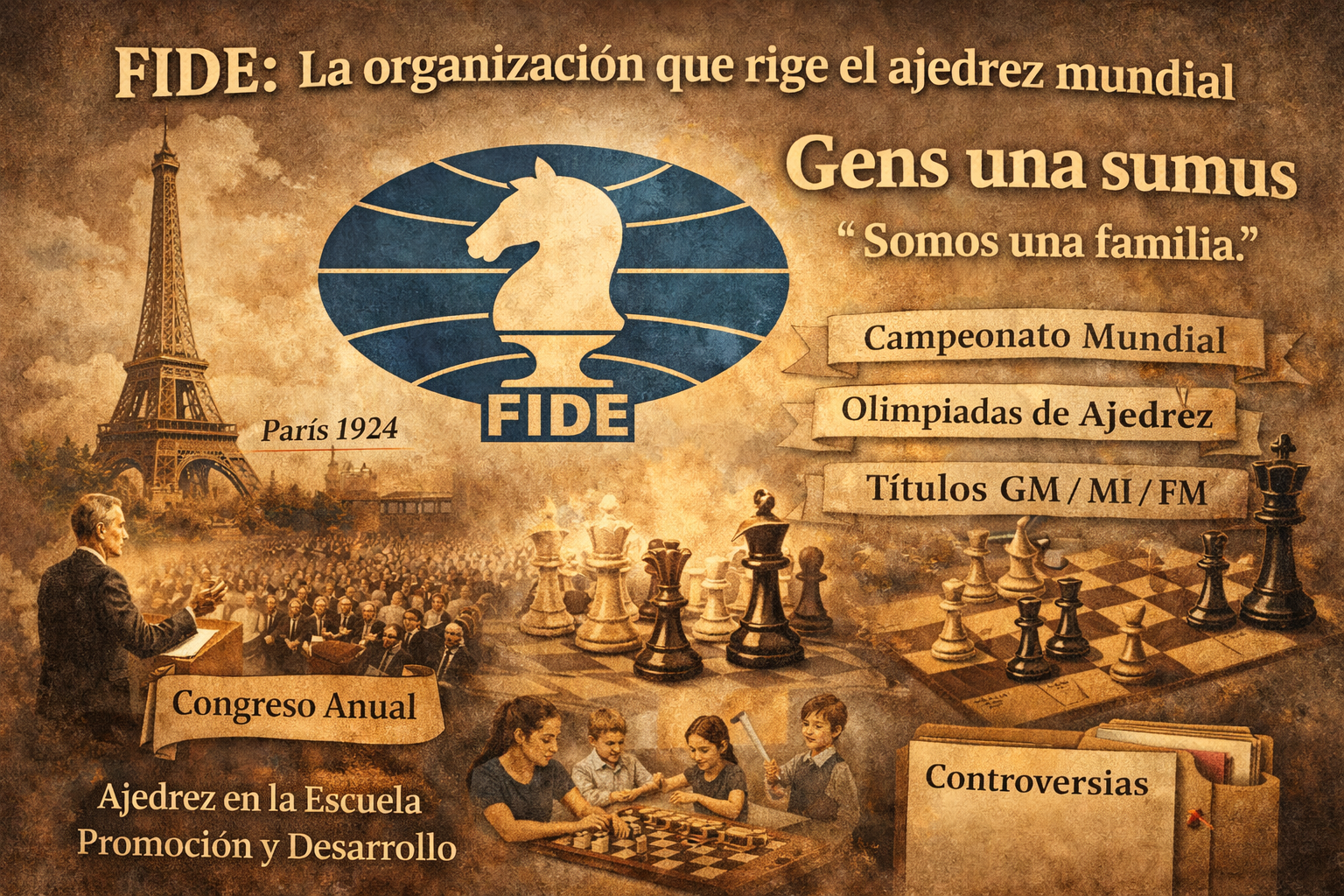
FIDE: la organización que rige el ajedrez mundial
Historia, estructura, torneos, títulos y los retos que han marcado su gobernanza.
Orígenes y evolución
La Federación Internacional de Ajedrez (FIDE) es la organización que gobierna el ajedrez a nivel mundial. Fue fundada en 1924 en París, Francia, y su lema es “Gens una sumus”, en latín: “Somos una familia”. Su creación respondió a una necesidad clara: unificar reglas, organizar campeonatos de alcance global y promover el ajedrez como deporte y cultura.
Estructura y funcionamiento
La FIDE está compuesta por federaciones nacionales de más de 180 países. Cada federación organiza el ajedrez en su territorio y colabora con FIDE en eventos y calendarios internacionales. La organización se rige por un Congreso, donde se discuten decisiones relevantes y se elige a la junta directiva, incluido el presidente.
Torneos y campeonatos
La FIDE organiza y supervisa torneos de alto perfil, incluido el Campeonato Mundial de Ajedrez. También coordina las Olimpiadas de Ajedrez, un evento bienal donde compiten equipos de todo el planeta. Además, la FIDE otorga títulos oficiales que funcionan como “rango” internacional: GM, IM, FM, entre otros.
- Campeonato Mundial: la cúspide competitiva individual.
- Olimpiadas: el gran escenario por equipos (selecciones nacionales).
- Títulos: credenciales reconocidas globalmente por rating, normas o resultados oficiales.
Promoción y desarrollo del ajedrez
Una misión clave de la FIDE es impulsar el ajedrez como herramienta educativa y cultural. Mediante programas como “Ajedrez en la Escuela”, busca integrar el juego en entornos formativos para desarrollar habilidades como pensamiento crítico, atención y resolución de problemas. También promueve la accesibilidad y la participación de grupos subrepresentados, incluyendo mujeres y jóvenes.
Desafíos y controversias
Como toda institución global, la FIDE ha enfrentado controversias a lo largo de los años: disputas políticas, conflictos de interés y acusaciones de corrupción han alimentado debates sobre gobernanza y transparencia. Aun así, la FIDE continúa adaptando su estructura y prácticas con el objetivo de fortalecer el futuro del ajedrez.
Conclusión
La FIDE juega un papel crucial en el ajedrez mundial: define marcos oficiales, organiza competencias, otorga títulos y promueve el crecimiento del juego. Con retos y todo, su existencia permite que el ajedrez se mantenga como un deporte intelectual con reglas comunes y proyección global.
Origins and evolution
The International Chess Federation (FIDE) is the global organization that governs chess. It was founded in 1924 in Paris, France, and its motto is “Gens una sumus”— Latin for “We are one family.” FIDE was created to unify chess rules, organize world-level championships, and promote chess worldwide as both sport and culture.
Structure and governance
FIDE is made up of national chess federations from more than 180 countries. Each federation runs chess activities locally and collaborates with FIDE on international events. The organization is governed through a Congress, where major decisions are made and the leadership is elected, including the FIDE President.
Tournaments and championships
FIDE organizes and supervises major competitions, including the World Chess Championship. It also oversees the Chess Olympiad, a biennial team event featuring national squads from around the world. In addition, FIDE awards official titles that serve as international credentials: GM, IM, FM, and more.
- World Championship: the highest individual competitive stage.
- Olympiad: the flagship team event (national selections).
- Titles: globally recognized credentials via rating, norms, or direct-title routes.
Promotion and development
One of FIDE’s key missions is promoting chess as an educational and cultural tool. Through programs like “Chess in Schools”, it encourages chess in educational settings to support skills such as critical thinking, focus, and problem-solving. FIDE also works to make chess more accessible and to expand participation among underrepresented groups, including women and youth.
Challenges and controversies
Like many global institutions, FIDE has faced controversies over the years—political disputes, conflicts of interest, and corruption allegations have driven debates about governance and transparency. Even so, FIDE continues to evolve its structures and practices in order to support chess’s long-term future.
Conclusion
FIDE plays a crucial role in world chess: it sets official frameworks, runs competitions, awards titles, and promotes growth. With all its challenges, its existence helps chess thrive as an intellectual sport with shared rules and global reach.