
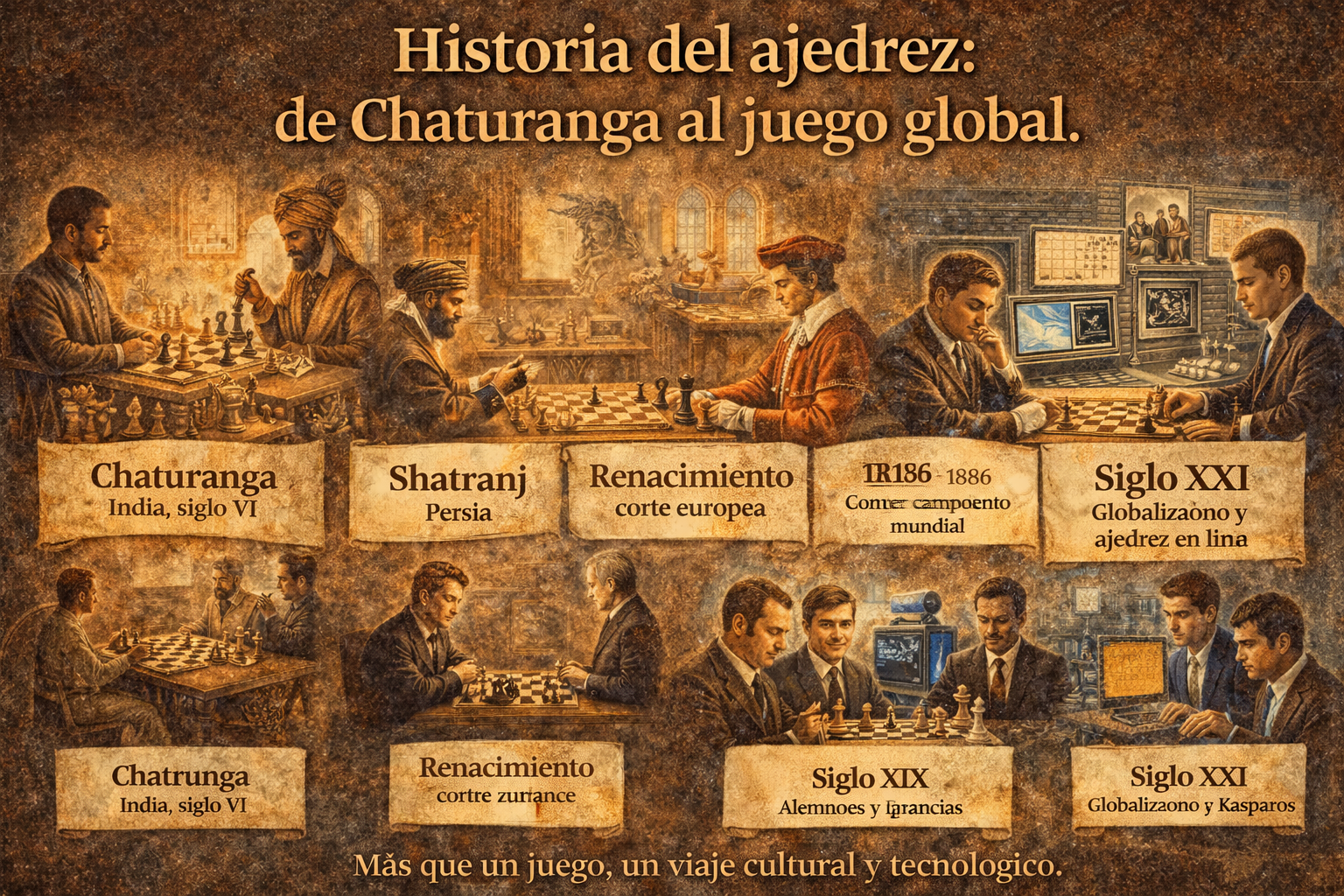
Historia del ajedrez: de Chaturanga al juego global
Un viaje cultural y tecnológico: guerra simbólica, cortes europeas, campeones, motores e internet.
La historia del ajedrez es un mapa de la humanidad: intercambio cultural, adaptación y progreso tecnológico. Desde el Chaturanga en la India hasta el ajedrez en línea del siglo XXI, el tablero ha sido espejo de guerra, filosofía y arte.
Orígenes e historia temprana
Nacimiento del Chaturanga (India, siglo VI)
El ajedrez surge alrededor del siglo VI d.C. como Chaturanga (“cuatro divisiones del ejército”). Se jugaba sobre un tablero de 8×8 y representaba una batalla simbólica entre dos fuerzas.
- Infantería → peón
- Caballería → caballo
- Elefantes → antecedente del alfil
- Carros → torre
Evolución en Persia: Shatranj
Con rutas comerciales y expansión cultural, el juego llega a Persia y se convierte en Shatranj. En esta etapa se afianzan reglas y conceptos como el jaque/jaque mate, se clarifican movimientos clave (como el del caballo) y se consolidan estructuras de juego que influirán en Europa.
Expansión al mundo islámico y Europa
Tras la conquista árabe de Persia, el Shatranj se difunde por el mundo islámico y llega a Europa, especialmente a través de la península ibérica. Tratadistas y jugadores preservan y enriquecen el juego, y Europa comienza a reinterpretarlo según su propia cultura.
La revolución del siglo XV
En Europa, durante el siglo XV, el ajedrez se transforma: la reina adquiere su poder actual y el alfil amplía su alcance. El ritmo se acelera y el juego se vuelve más táctico y explosivo: nace el ajedrez moderno.
Del Renacimiento a la era moderna
Renacimiento · Ajedrez en la corte
El ajedrez se vuelve símbolo de cultura y refinamiento. Surgen tratados que sistematizan ideas de estrategia y táctica.
Siglo XVIII · Cambio de centro
El foco se desplaza de España/Italia a Francia y luego a Inglaterra y Alemania. Philidor destaca con ideas posicionales, famosa su visión de que “los peones son el alma del ajedrez”.
Siglo XIX: organización y primeros campeones
El ajedrez se institucionaliza: nacen clubes, se estandarizan reglas y se vuelven comunes los torneos internacionales. En 1886, Wilhelm Steinitz se convierte en el primer campeón mundial oficial, impulsando el ajedrez “científico”.
Siglo XX: teoría, campeones y computadoras
El siglo XX consolida una dinastía de campeones (Capablanca, Alekhine, Botvinnik, Fischer, Kasparov) y una expansión teórica enorme, especialmente en aperturas y planes posicionales. Hacia el final del siglo, la tecnología cambia el tablero: las máquinas entran al juego.
Siglo XXI: globalización y ajedrez en línea
Hoy el ajedrez es un fenómeno global. Campeones de distintas regiones dominan la escena y el ajedrez en línea democratiza el acceso: jugar, estudiar y analizar está al alcance de cualquiera con internet.
- Plataformas digitales y comunidades masivas.
- Motores y bases de datos como herramientas cotidianas.
- Educación: cursos, streamers, análisis y contenido gratuito.
Conclusión
La historia del ajedrez es un viaje de adaptación cultural y evolución tecnológica. Del Chaturanga al mundo online, el juego sigue vivo porque combina arte, ciencia y estrategia en un formato eterno.
The history of chess is a map of humanity: cultural exchange, adaptation, and technological progress. From Chaturanga in India to online chess today, the board has mirrored war, philosophy, and art.
Origins and early history
Chaturanga is born (India, 6th century)
Chess emerges around the 6th century CE as Chaturanga (“four divisions of the army”). Played on an 8×8 board, it represented a symbolic battle between two forces.
- Infantry → pawn
- Cavalry → knight
- War elephants → bishop ancestor
- Chariots → rook
Persia: the Shatranj era
Through trade routes and cultural expansion, the game reaches Persia and becomes Shatranj. Key rules and concepts solidify, including check/checkmate logic, clearer movement conventions, and structures that later shaped Europe.
Spread into the Islamic world and Europe
After the Arab conquest of Persia, Shatranj spreads across the Islamic world and reaches Europe, notably through Iberia. Scholars preserve and enrich the game, while Europe gradually reinterprets it through its own cultural lens.
The 15th-century revolution
In Europe, during the 15th century, chess transforms: the queen gains her modern power and the bishop extends its reach. The tempo accelerates and the game becomes sharper—modern chess is born.
From the Renaissance to modernity
Renaissance · Chess at court
Chess becomes a symbol of culture and refinement. Treatises systematize strategic and tactical ideas.
18th century · The center shifts
The chess world shifts from Spain/Italy to France, then to England and Germany. Philidor advances positional thinking, famously emphasizing the role of pawns.
19th century: organization and early champions
Chess becomes institutionalized: clubs appear, rules standardize, and international tournaments flourish. In 1886, Wilhelm Steinitz becomes the first official world champion, promoting a “scientific” approach.
20th century: theory, champions, and computers
The 20th century builds a dynasty of champions (Capablanca, Alekhine, Botvinnik, Fischer, Kasparov) and massive theoretical growth, especially in openings and positional planning. By the century’s end, technology reshapes the board: machines enter the arena.
21st century: globalization and online chess
Today chess is truly global. Champions from many regions dominate, and online platforms democratize access: playing, studying, and analyzing is available to anyone with an internet connection.
- Massive digital communities and platforms.
- Engines and databases as everyday tools.
- Education: courses, streamers, analysis, and free content.
Conclusion
Chess history is a journey of cultural adaptation and technological evolution. From Chaturanga to online chess, the game remains alive because it blends art, science, and strategy into something timeless.