La relevancia del ajedrez en la India: origen, identidad y potencia mundial
De Chaturanga al top mundial: educación, cultura y una generación que ya manda en la élite.
Hablar de ajedrez es, inevitablemente, hablar de la India. No solo porque el juego nació en su territorio, sino porque hoy el país se ha consolidado como una de las mayores potencias ajedrecísticas del mundo. En la India, el ajedrez no es una moda: es herencia cultural, herramienta educativa y proyección internacional.
El origen: el ajedrez como herencia cultural
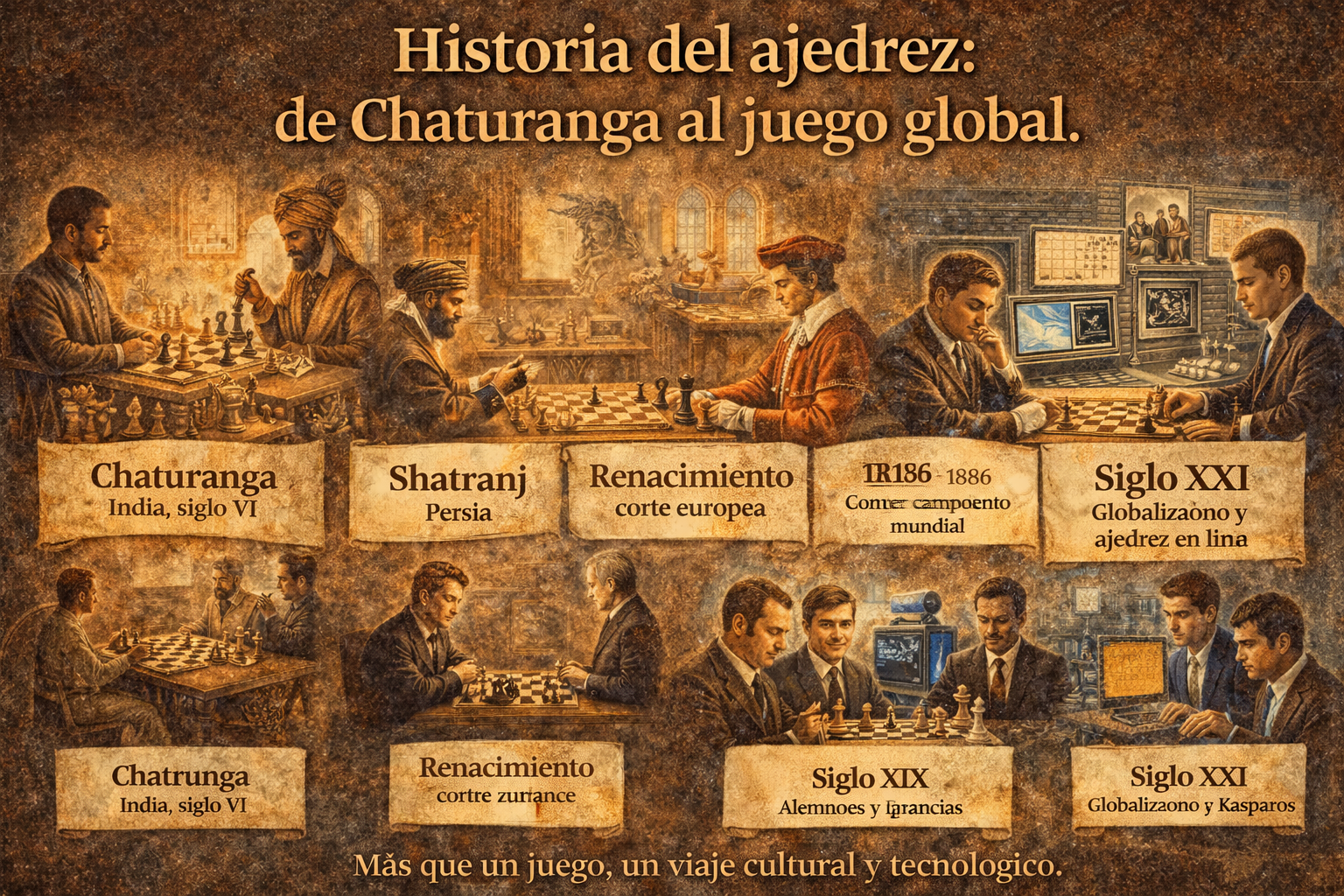
El ajedrez surge en la India alrededor del siglo VI d.C. bajo el nombre de Chaturanga, un juego que representaba cuatro divisiones del ejército: infantería, caballería, elefantes y carros. Esa estructura simbólica revela algo profundo: una tradición de pensamiento estratégico donde el tiempo, el equilibrio y la consecuencia importan.
Desde allí, el juego viaja a Persia, al mundo islámico y a Europa, hasta convertirse en el ajedrez moderno. Pero su raíz —la idea de convertir la guerra en lógica— nace en casa.
De tradición a sistema: el ajedrez en la educación india
La relevancia contemporánea de la India no se explica solo por historia: se explica por estructura. En escuelas, academias y programas locales, el ajedrez se usa para entrenar mente y carácter.
- Pensamiento lógico y planificación a largo plazo.
- Resolución de problemas bajo presión.
- Disciplina, autocontrol y gestión emocional.
- Aprendizaje incremental: mejorar por patrones, no por milagros.
Viswanathan Anand y el punto de inflexión
El ajedrez indio moderno tiene un antes y un después con Viswanathan Anand. Sus campeonatos mundiales y su presencia sostenida en la súper élite cambiaron el imaginario nacional: demostró que un jugador indio podía dominar el tablero global.
La élite contemporánea: la generación que domina el presente
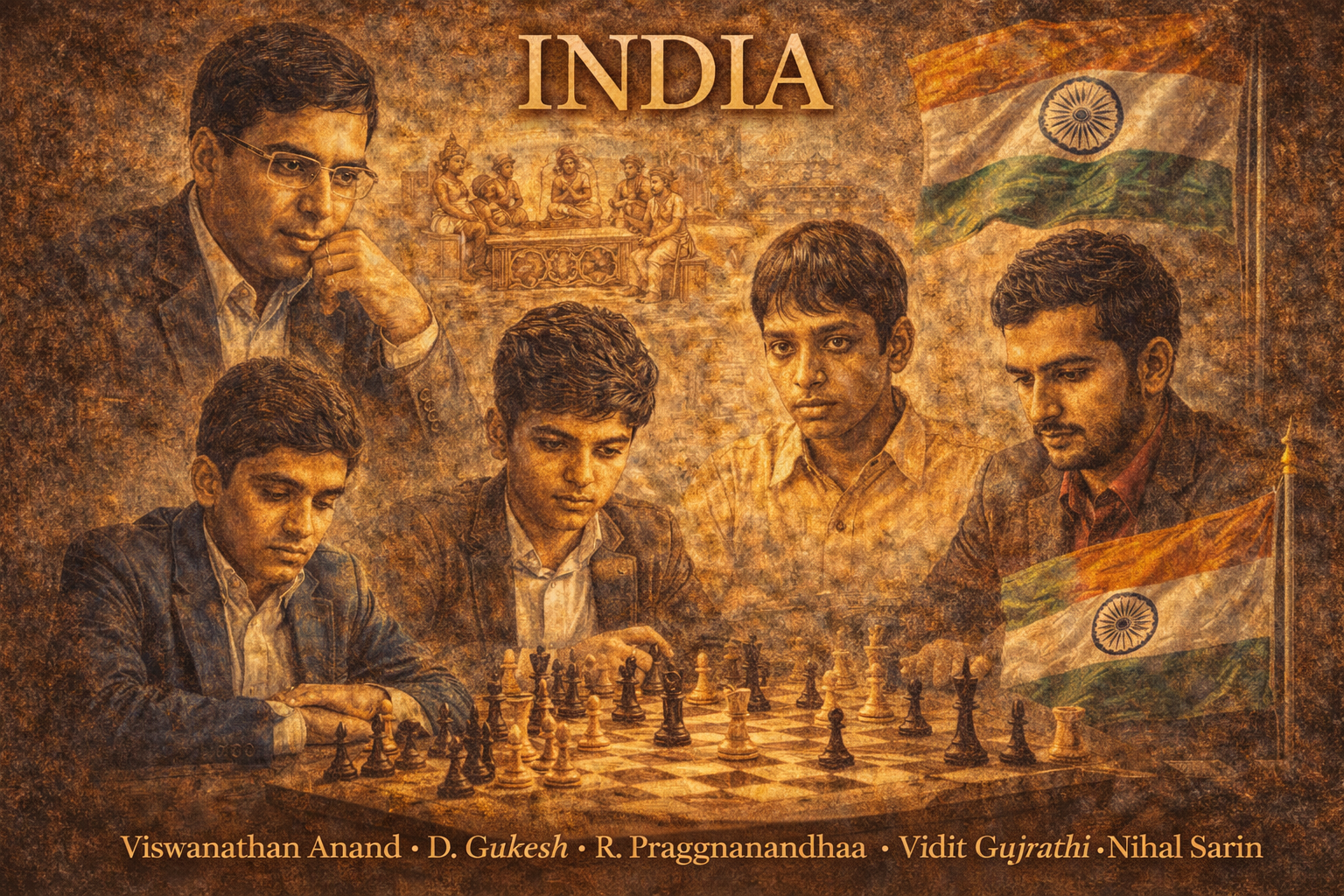
Hoy la India no habla en futuro: habla en presente competitivo. Nunca antes un país había producido tantos grandes maestros jóvenes con tanta profundidad de talento, preparación y competitividad interna.
D. Gukesh
El símbolo del ahora
Gukesh representa el punto más alto de esta ola: rendimiento sostenido en torneos fuertes, madurez estratégica y sangre fría para jugar partidas largas sin desorden. Para muchos analistas, no es “promesa”: es parte central del tablero actual.
R. Praggnanandhaa
Audacia + creatividad
Talento explosivo y valentía en posiciones complejas. Su estilo agresivo y su capacidad para competir contra la élite lo convierten en uno de los nombres más seguidos del circuito.
Vidit Gujrathi
Solidez de élite
Profundo, estable y confiable. Vidit es un pilar competitivo y una pieza clave en equipos nacionales, combinando teoría moderna y gran disciplina posicional.
Nihal Sarin
Velocidad con control
Especialmente fuerte en rápidas y blitz, combina cálculo veloz con calma competitiva. Es uno de los talentos más completos de su generación.
Pentala Harikrishna
Experiencia que sostiene
El puente entre generaciones: estabilidad, liderazgo y consistencia internacional. Su experiencia fortalece la columna vertebral del ajedrez indio moderno.
Clave del ecosistema
Competencia interna brutal
Cuando “jugar fuerte” es la norma, el techo sube solo. La India hoy produce volumen, profundidad y presión competitiva como pocas potencias en la historia.
Ajedrez online y democratización
La India ha capitalizado el auge del ajedrez online: plataformas, torneos rápidos, contenido educativo y comunidades masivas han reducido barreras geográficas y económicas. El talento puede emerger desde cualquier región, no solo desde grandes ciudades.
Más que un deporte: identidad y proyección global
En la India, el ajedrez funciona como identidad cultural y proyección internacional:
- Herencia: el juego nace en su tradición histórica.
- Educación: se integra como herramienta formativa.
- Soft power: presencia constante en escenarios globales.
Conclusión
La relevancia del ajedrez en la India no es casual ni coyuntural: es tradición, sistema y una generación extraordinaria que ya compite en la cima. Mientras otros países construyen estructuras, la India las perfecciona en tiempo real.
Talking about chess inevitably means talking about India. Not only because the game was born there, but because the country has become one of the world’s strongest chess powerhouses. In India, chess isn’t a trend: it’s cultural heritage, an educational tool, and global projection.
Origin: chess as cultural heritage
Chess emerges in India around the 6th century CE as Chaturanga, a game representing four divisions of the army: infantry, cavalry, elephants, and chariots. That symbolic structure reveals a tradition of strategic thinking—where time, balance, and consequences matter.
From there, the game travels to Persia, the Islamic world, and Europe, eventually becoming modern chess. But the root idea—turning war into logic—starts at home.
From tradition to system: chess in Indian education
India’s current dominance isn’t explained by history alone: it’s explained by structure. Through schools, academies, and local programs, chess is used to train both mind and character.
- Logical thinking and long-term planning.
- Problem solving under pressure.
- Discipline, self-control, and emotional management.
- Incremental improvement through patterns and practice.
Viswanathan Anand: the turning point
Modern Indian chess has a clear “before and after” with Viswanathan Anand. His world titles and sustained presence at the top changed the national imagination: an Indian player could dominate globally.
Today’s elite: a generation leading right now
India doesn’t speak in future tense anymore—it speaks in present results. Few nations have produced so many young grandmasters with such depth, preparation, and internal competition.
D. Gukesh
The face of “now”
Gukesh sits at the peak of the new wave: consistent performance in strong events, strategic maturity, and the composure to navigate long games with precision. For many, he’s not a “prospect”—he’s already central to the current elite.
R. Praggnanandhaa
Boldness + creativity
Explosive talent with courage in complex positions. His attacking instincts and readiness to challenge the elite make him one of the most watched players on tour.
Vidit Gujrathi
Elite-level solidity
Deep, stable, and reliable. Vidit is a competitive pillar and a key figure in team events, blending modern theory with positional discipline.
Nihal Sarin
Speed with control
Especially strong in rapid and blitz, he combines fast calculation with calm competitive focus—one of the most complete talents of his generation.
Pentala Harikrishna
Experience that anchors
The bridge between generations: stability, leadership, and consistent international presence. He strengthens the backbone of modern Indian chess.
Ecosystem advantage
Brutal internal competition
When “playing strong” is the baseline, the ceiling rises automatically. India currently generates volume, depth, and competitive pressure at rare scale.
Online chess and democratization
India has embraced the online chess boom: platforms, fast events, educational content, and huge communities have reduced geographic and economic barriers. Talent can emerge from anywhere—not just major cities.
More than a sport: identity and global projection
In India, chess functions as both identity and international projection:
- Heritage: the game’s roots are part of national history.
- Education: chess is integrated as a formative tool.
- Soft power: constant presence on global stages.
Conclusion
India’s chess relevance isn’t accidental or temporary: it’s tradition, system, and an extraordinary generation already competing at the very top. While others build structures, India refines them in real time.