Publicado el

La relevancia del ajedrez en la India

La relevancia del ajedrez en la India: origen, identidad y potencia mundial

De Chaturanga al top mundial: educación, cultura y una generación que ya manda en la élite.

Hablar de ajedrez es, inevitablemente, hablar de la India. No solo porque el juego nació en su territorio, sino porque hoy el país se ha consolidado como una de las mayores potencias ajedrecísticas del mundo. En la India, el ajedrez no es una moda: es herencia cultural, herramienta educativa y proyección internacional.

El origen: el ajedrez como herencia cultural

El ajedrez surge en la India alrededor del siglo VI d.C. bajo el nombre de Chaturanga, un juego que representaba cuatro divisiones del ejército: infantería, caballería, elefantes y carros. Esa estructura simbólica revela algo profundo: una tradición de pensamiento estratégico donde el tiempo, el equilibrio y la consecuencia importan.

Desde allí, el juego viaja a Persia, al mundo islámico y a Europa, hasta convertirse en el ajedrez moderno. Pero su raíz —la idea de convertir la guerra en lógica— nace en casa.

De tradición a sistema: el ajedrez en la educación india

La relevancia contemporánea de la India no se explica solo por historia: se explica por estructura. En escuelas, academias y programas locales, el ajedrez se usa para entrenar mente y carácter.

  • Pensamiento lógico y planificación a largo plazo.
  • Resolución de problemas bajo presión.
  • Disciplina, autocontrol y gestión emocional.
  • Aprendizaje incremental: mejorar por patrones, no por milagros.

Viswanathan Anand y el punto de inflexión

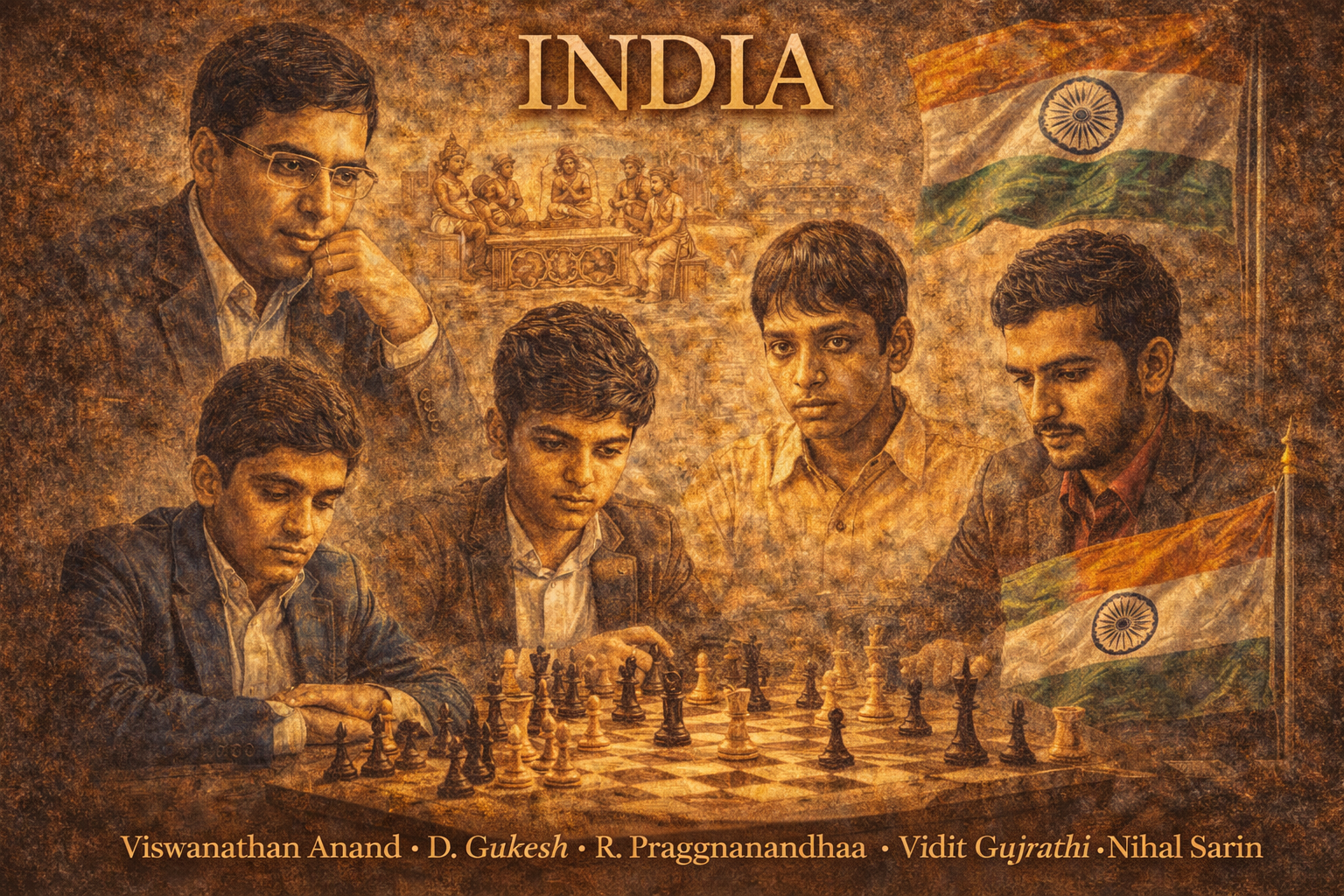
El ajedrez indio moderno tiene un antes y un después con Viswanathan Anand. Sus campeonatos mundiales y su presencia sostenida en la súper élite cambiaron el imaginario nacional: demostró que un jugador indio podía dominar el tablero global.

Efecto Anand Inspiró una infraestructura: academias, patrocinio, visibilidad mediática y una generación que creció viendo el ajedrez como carrera real.

La élite contemporánea: la generación que domina el presente

Hoy la India no habla en futuro: habla en presente competitivo. Nunca antes un país había producido tantos grandes maestros jóvenes con tanta profundidad de talento, preparación y competitividad interna.

D. Gukesh

El símbolo del ahora

Gukesh representa el punto más alto de esta ola: rendimiento sostenido en torneos fuertes, madurez estratégica y sangre fría para jugar partidas largas sin desorden. Para muchos analistas, no es “promesa”: es parte central del tablero actual.

R. Praggnanandhaa

Audacia + creatividad

Talento explosivo y valentía en posiciones complejas. Su estilo agresivo y su capacidad para competir contra la élite lo convierten en uno de los nombres más seguidos del circuito.

Vidit Gujrathi

Solidez de élite

Profundo, estable y confiable. Vidit es un pilar competitivo y una pieza clave en equipos nacionales, combinando teoría moderna y gran disciplina posicional.

Nihal Sarin

Velocidad con control

Especialmente fuerte en rápidas y blitz, combina cálculo veloz con calma competitiva. Es uno de los talentos más completos de su generación.

Pentala Harikrishna

Experiencia que sostiene

El puente entre generaciones: estabilidad, liderazgo y consistencia internacional. Su experiencia fortalece la columna vertebral del ajedrez indio moderno.

Clave del ecosistema

Competencia interna brutal

Cuando “jugar fuerte” es la norma, el techo sube solo. La India hoy produce volumen, profundidad y presión competitiva como pocas potencias en la historia.

Ajedrez online y democratización

La India ha capitalizado el auge del ajedrez online: plataformas, torneos rápidos, contenido educativo y comunidades masivas han reducido barreras geográficas y económicas. El talento puede emerger desde cualquier región, no solo desde grandes ciudades.

Más que un deporte: identidad y proyección global

En la India, el ajedrez funciona como identidad cultural y proyección internacional:

  • Herencia: el juego nace en su tradición histórica.
  • Educación: se integra como herramienta formativa.
  • Soft power: presencia constante en escenarios globales.
El ajedrez nació en la India. Hoy, también se decide allí hacia dónde va el juego. Del origen al futuro: el tablero vuelve a casa.

Conclusión

La relevancia del ajedrez en la India no es casual ni coyuntural: es tradición, sistema y una generación extraordinaria que ya compite en la cima. Mientras otros países construyen estructuras, la India las perfecciona en tiempo real.

Talking about chess inevitably means talking about India. Not only because the game was born there, but because the country has become one of the world’s strongest chess powerhouses. In India, chess isn’t a trend: it’s cultural heritage, an educational tool, and global projection.

Origin: chess as cultural heritage

Chess emerges in India around the 6th century CE as Chaturanga, a game representing four divisions of the army: infantry, cavalry, elephants, and chariots. That symbolic structure reveals a tradition of strategic thinking—where time, balance, and consequences matter.

From there, the game travels to Persia, the Islamic world, and Europe, eventually becoming modern chess. But the root idea—turning war into logic—starts at home.

From tradition to system: chess in Indian education

India’s current dominance isn’t explained by history alone: it’s explained by structure. Through schools, academies, and local programs, chess is used to train both mind and character.

  • Logical thinking and long-term planning.
  • Problem solving under pressure.
  • Discipline, self-control, and emotional management.
  • Incremental improvement through patterns and practice.

Viswanathan Anand: the turning point

Modern Indian chess has a clear “before and after” with Viswanathan Anand. His world titles and sustained presence at the top changed the national imagination: an Indian player could dominate globally.

The Anand effect He helped ignite infrastructure: academies, sponsorship, media visibility, and a generation that grew up seeing chess as a real career path.

Today’s elite: a generation leading right now

India doesn’t speak in future tense anymore—it speaks in present results. Few nations have produced so many young grandmasters with such depth, preparation, and internal competition.

D. Gukesh

The face of “now”

Gukesh sits at the peak of the new wave: consistent performance in strong events, strategic maturity, and the composure to navigate long games with precision. For many, he’s not a “prospect”—he’s already central to the current elite.

R. Praggnanandhaa

Boldness + creativity

Explosive talent with courage in complex positions. His attacking instincts and readiness to challenge the elite make him one of the most watched players on tour.

Vidit Gujrathi

Elite-level solidity

Deep, stable, and reliable. Vidit is a competitive pillar and a key figure in team events, blending modern theory with positional discipline.

Nihal Sarin

Speed with control

Especially strong in rapid and blitz, he combines fast calculation with calm competitive focus—one of the most complete talents of his generation.

Pentala Harikrishna

Experience that anchors

The bridge between generations: stability, leadership, and consistent international presence. He strengthens the backbone of modern Indian chess.

Ecosystem advantage

Brutal internal competition

When “playing strong” is the baseline, the ceiling rises automatically. India currently generates volume, depth, and competitive pressure at rare scale.

Online chess and democratization

India has embraced the online chess boom: platforms, fast events, educational content, and huge communities have reduced geographic and economic barriers. Talent can emerge from anywhere—not just major cities.

More than a sport: identity and global projection

In India, chess functions as both identity and international projection:

  • Heritage: the game’s roots are part of national history.
  • Education: chess is integrated as a formative tool.
  • Soft power: constant presence on global stages.
Chess was born in India. Today, the game’s direction is being shaped there again. From origin to future: the board comes back home.

Conclusion

India’s chess relevance isn’t accidental or temporary: it’s tradition, system, and an extraordinary generation already competing at the very top. While others build structures, India refines them in real time.
Publicado el

Miguel Najdorf: Un Maestro de la Supervivencia y la Creación en el Tablero

Miguel Najdorf: resiliencia, memoria y leyenda

De Polonia a Argentina: un maestro que convirtió el dolor en energía creativa sobre el tablero.

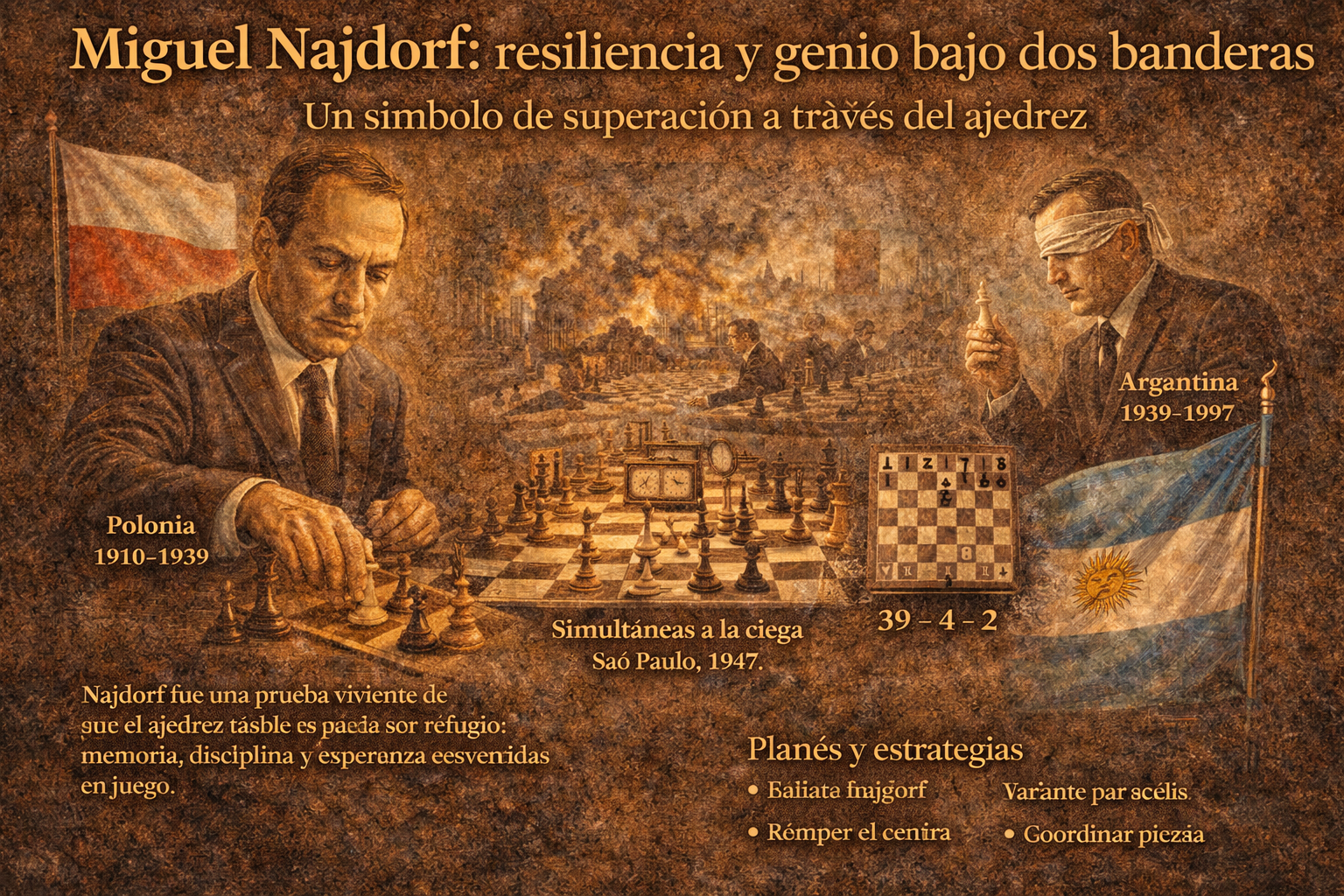
Miguel Najdorf, nacido como Mieczysław Najdorf el 15 de abril de 1910 en Grodzisk Mazowiecki, Polonia, es una de las figuras más emblemáticas en la historia del ajedrez mundial. Su vida simboliza la fuerza del espíritu humano y refleja una capacidad extraordinaria de adaptación y resiliencia frente a circunstancias extremas.

Primeros pasos en Polonia

Najdorf descubrió su pasión por el ajedrez desde muy joven, destacándose rápidamente por su intuición táctica y su sensibilidad estratégica. En la Polonia de entreguerras, el ajedrez gozaba de gran prestigio cultural, y Najdorf encontró en el juego un territorio ideal para desarrollar creatividad e intelecto. Su talento lo llevó a competir en torneos nacionales e internacionales, proyectándolo como uno de los nombres fuertes de la escena europea. Fue contemporáneo de figuras como Savielly Tartakower y Akiba Rubinstein, influencias importantes en su visión del juego.

La guerra y una decisión que cambió su vida

La Segunda Guerra Mundial marcó un punto de quiebre. En agosto de 1939, mientras participaba en la Olimpiada de Ajedrez en Buenos Aires, estalló la guerra en Europa. Najdorf tomó la decisión —dolorosa y definitiva— de no regresar a casa, consciente del riesgo que implicaba la ocupación nazi. Aquella elección tuvo un costo devastador: la pérdida de su familia inmediata, víctima del Holocausto.

En Argentina, Najdorf encontró un nuevo hogar y se convirtió en una figura clave del ajedrez latinoamericano. Se nacionalizó argentino y, gracias a su carisma y fuerza competitiva, se ganó la admiración no solo de la comunidad ajedrecística, sino del público general: un símbolo de superación.

Najdorf fue una prueba viviente de que el ajedrez también puede ser refugio: memoria, disciplina y esperanza convertidas en juego.

El genio de las simultáneas a la ciega

Najdorf destacó de manera especial por sus exhibiciones de simultáneas a la ciega, una modalidad que exige concentración y memoria de otro planeta. Su hazaña más célebre ocurrió en São Paulo (1947), cuando enfrentó simultáneamente a 45 rivales sin ver los tableros: ganó 39, empató 4 y perdió solo 2. Fue un récord que resonó durante décadas y que alimentó su mito.

Un legado duradero en el ajedrez moderno

Najdorf fue reconocido por un estilo audaz, dinámico y profundamente original, especialmente en aperturas. La Variante Najdorf de la Defensa Siciliana —que lleva su nombre— es testimonio permanente de su influencia en el ajedrez moderno. Campeones y súper élite la han empleado durante décadas como un arma de primer nivel.

Más allá del tablero, Najdorf fue un embajador incansable del ajedrez: comunicador nato, figura querida y referente cultural. Su historia funciona como metáfora del propio juego: cada decisión pesa, cada cambio exige adaptación, y aun en escenarios adversos siempre existe una posibilidad de reinvención.

Video recomendado (en español)

Cierre

Miguel Najdorf falleció el 4 de julio de 1997 en Málaga, España. Su legado perdura como una fuente inagotable de inspiración: un recordatorio de que el tablero no solo refleja el ajedrez, sino también la vida—con desafíos, oportunidades y eternas posibilidades de triunfo.

Miguel Najdorf—born Mieczysław Najdorf on April 15, 1910 in Grodzisk Mazowiecki, Poland—stands among the most iconic figures in chess history. His life symbolizes the strength of the human spirit and an extraordinary ability to adapt and endure through the harshest circumstances.

Early steps in Poland

Najdorf discovered chess at a young age and quickly stood out for his tactical instinct and strategic feel. In interwar Poland, chess had strong cultural prestige, and Najdorf found in the game a perfect arena for creativity and intellect. His talent carried him into major national and international events, establishing him as a rising name in Europe. He was a contemporary of legends like Savielly Tartakower and Akiba Rubinstein, who influenced his approach and chess imagination.

War—and a life-changing decision

World War II became a tragic turning point. In August 1939, while playing in the Chess Olympiad in Buenos Aires, war erupted in Europe. Najdorf made the painful decision not to return home, understanding the mortal danger of Nazi occupation. That decision came with a devastating cost: the loss of his immediate family in the Holocaust.

In Argentina, Najdorf built a new life and became a central figure in Latin American chess. He gained Argentine nationality and, through charisma, resilience, and elite-level strength, earned admiration well beyond the chess community—becoming a symbol of perseverance.

Najdorf proved chess can be refuge: memory, discipline, and hope transformed into play.

The genius of blindfold simuls

Najdorf became famous for blindfold simultaneous exhibitions—an extreme test of focus and memory. His most celebrated feat took place in São Paulo (1947), where he played 45 opponents at once without seeing the boards: 39 wins, 4 draws, and only 2 losses. It was a record that echoed for decades and fed his legend.

A lasting legacy in modern chess

Najdorf was known for bold, dynamic, original chess—especially in opening play. The Najdorf Variation of the Sicilian Defense, named in his honor, remains a living testament to his influence on modern chess. Top champions and elite players have relied on it for decades as a world-class weapon.

Beyond the board, Najdorf was a tireless chess ambassador: a vibrant personality, a natural communicator, and a cultural reference point. His story mirrors the game itself—every decision has consequences, adaptation is essential, and even under adversity there is always room for reinvention.

Recommended video (Spanish)

Closing

Miguel Najdorf died on July 4, 1997 in Málaga, Spain. His legacy endures as a deep source of inspiration—reminding us that the board reflects life itself, filled with challenges, opportunities, and endless possibilities for triumph.

“`
Publicado el

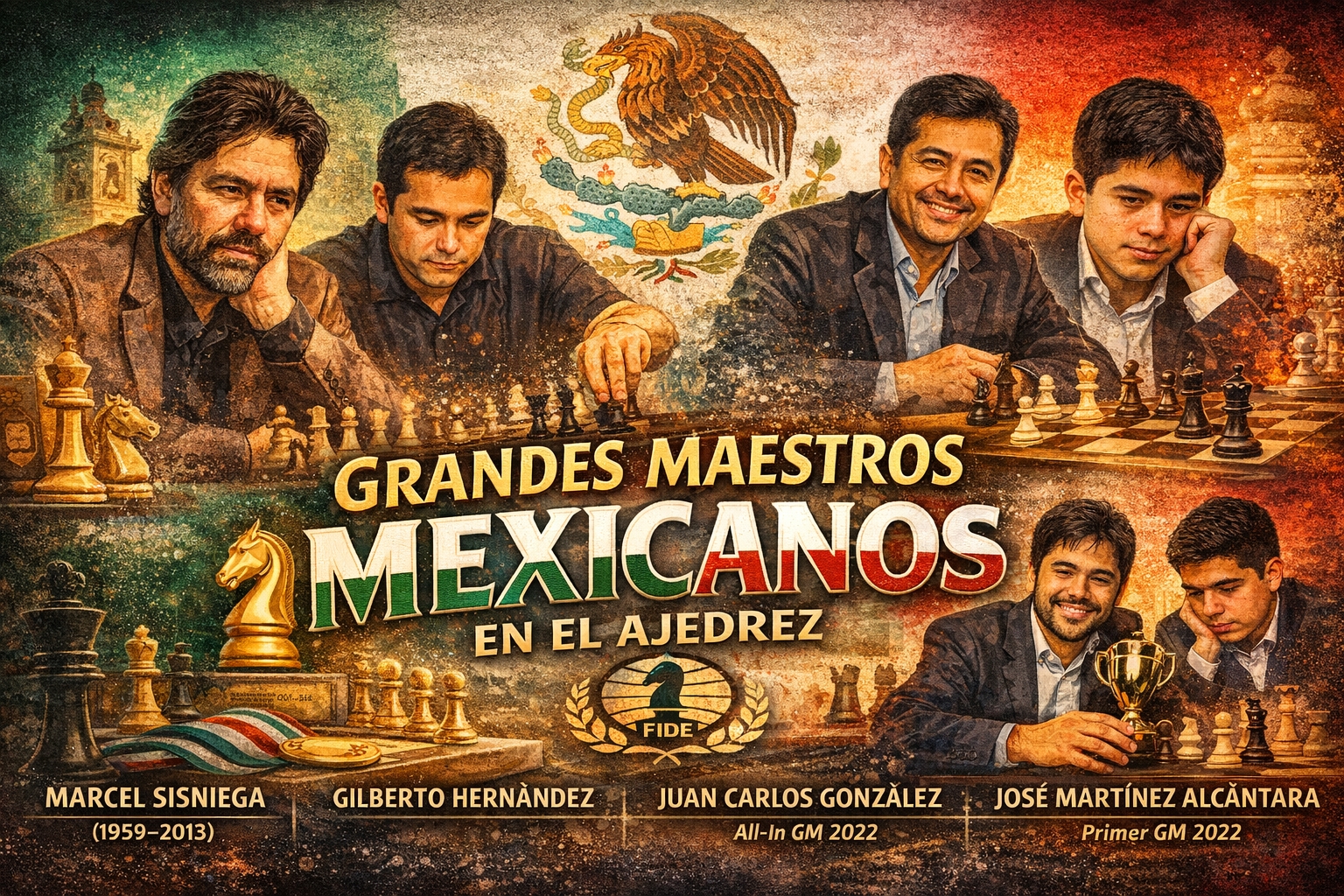
La Historia de los Grandes Maestros Mexicanos en el Ajedrez

Grandes Maestros Mexicanos: historia, legado y nueva generación

Un recorrido por los GM que marcaron el camino: pioneros, referentes y el resurgimiento moderno del ajedrez en México.

México, un país conocido por su rica cultura y tradiciones, también tiene una historia notable en el ajedrez. A lo largo de los años, varios ajedrecistas mexicanos han alcanzado el título de Gran Maestro (GM), el honor más alto otorgado por la FIDE. Este artículo recorre la trayectoria de estos jugadores y su impacto tanto a nivel nacional como internacional.

Los primeros pioneros

Marcel Sisniega Campbell (1959–2013) fue el primer mexicano en obtener el título de Gran Maestro (1992), un hito decisivo para el ajedrez nacional. Sisniega no solo brilló en el tablero: también fue cineasta y escritor. Su figura inspiró a futuras generaciones, demostrando que el ajedrez puede convivir con una vida creativa y culturalmente activa.

La era moderna

En las décadas siguientes, otros ajedrecistas siguieron los pasos de Sisniega, elevando el nivel competitivo y la presencia de México en torneos internacionales.

  • Gilberto Hernández Guerrero (GM, 1995): uno de los jugadores más consistentes del país, con participación en múltiples Olimpiadas y un historial sólido en el circuito internacional.
  • Juan Carlos González Zamora (GM, 1997): nacido en Cuba y naturalizado mexicano, fue pilar del ajedrez nacional durante años, representando a México en numerosas competiciones y acumulando campeonatos nacionales.

El resurgimiento del ajedrez mexicano

En años recientes se percibe un impulso renovado, con jóvenes talentos que han ganado visibilidad internacional y fortalecen el ecosistema local: torneos, academias, entrenadores y comunidad.

  • José Martínez Alcántara (n. 1999): uno de los grandes maestros más recientes en México. Nacido en Perú, se ha establecido en Puebla, donde participa en la academia All-In Chess, formando e inspirando a nuevas generaciones.
  • Luis Fernando Ibarra Chami (n. 2000): otro joven GM que ha representado a México en torneos internacionales, confirmando que el futuro del ajedrez nacional es prometedor.
Idea clave La influencia de los GM mexicanos va más allá de sus resultados: han impulsado comunidad, formación y visibilidad, creando un efecto dominó que fortalece todo el ajedrez en México.

Impacto y legado

La huella de estos grandes maestros trasciende lo individual. Han sido modelos para jóvenes, promotores del ajedrez y piezas centrales en el crecimiento de una comunidad vibrante. A través de academias, torneos y programas educativos, contribuyeron a sembrar una cultura ajedrecística más fuerte y ambiciosa.

Conclusión

La historia de los Grandes Maestros mexicanos es una historia de perseverancia, talento y pasión. Desde pioneros como Marcel Sisniega hasta figuras modernas como José Martínez Alcántara y Luis Fernando Ibarra Chami, cada uno ha dejado una marca en el ajedrez nacional. Con el crecimiento continuo del juego en México, todo apunta a que veremos nuevos talentos listos para llevar esta tradición a nuevas alturas.

Mexico is known worldwide for its rich culture and traditions—and it also has a notable chess history. Over the years, several Mexican players have earned the Grandmaster (GM) title, the highest honor awarded by FIDE. This article explores their journey and their impact on chess both nationally and internationally.

The early pioneers

Marcel Sisniega Campbell (1959–2013) became the first Mexican to earn the Grandmaster title (1992), a landmark moment for Mexican chess. Sisniega’s influence reached beyond the board: he was also a filmmaker and writer. His career inspired future generations, proving chess can coexist with a creative and culturally active life.

The modern era

In the following decades, more players followed Sisniega’s path, raising Mexico’s competitive level and international presence.

  • Gilberto Hernández Guerrero (GM, 1995): one of Mexico’s most consistent players, with multiple Olympiad appearances and a strong international record.
  • Juan Carlos González Zamora (GM, 1997): Cuban-born and naturalized Mexican, he became a pillar of Mexican chess, representing the country in many international events and winning multiple national championships.

Mexico’s chess resurgence

In recent years, Mexico has seen renewed momentum, with young talent stepping onto the international stage and strengthening local chess ecosystems: tournaments, academies, coaches, and community.

  • José Martínez Alcántara (b. 1999): one of the most recent GMs in Mexico. Born in Peru, he has settled in Puebla, where he works with the All-In Chess academy, inspiring and training the next generation.
  • Luis Fernando Ibarra Chami (b. 2000): another young GM who has represented Mexico internationally, signaling a promising future for Mexican chess.
Key idea The impact of Mexican grandmasters goes beyond results: they build community, develop talent, and increase visibility—creating a ripple effect that strengthens chess across the country.

Impact and legacy

Their influence extends beyond individual achievements. These grandmasters have served as role models, promoters, and key drivers in the growth of a vibrant chess community. Through academies, tournaments, and educational programs, they helped foster a stronger and more ambitious chess culture in Mexico.

Conclusion

The story of Mexican Grandmasters is a story of perseverance, talent, and passion. From pioneers like Marcel Sisniega to modern figures like José Martínez Alcántara and Luis Fernando Ibarra Chami, each has left an indelible mark on Mexican chess. As chess continues to grow in popularity in Mexico, more emerging talent is likely on the horizon—ready to take this tradition of excellence to new heights.

“`
Publicado el

Paul Charles Morphy: El Genio del Ajedrez

Paul Morphy: el prodigio que se adelantó a su tiempo

Una carrera breve, un impacto eterno: Morphy convirtió el desarrollo y la táctica en arte.

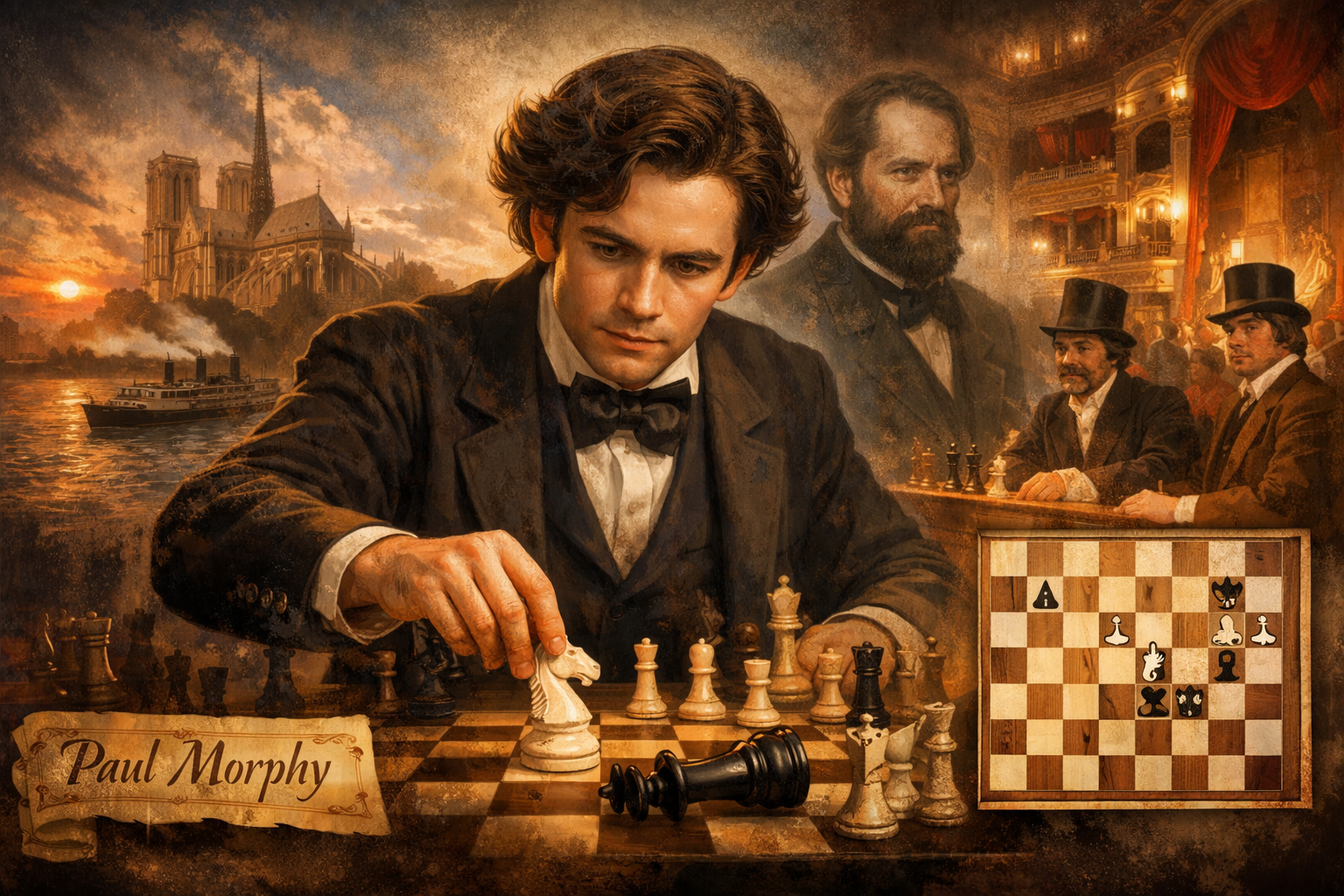
Paul Charles Morphy, nacido el 22 de junio de 1837 en Nueva Orleans, Louisiana, es ampliamente considerado uno de los mayores prodigios de la historia del ajedrez. Su talento innato y su meteórica carrera dejaron una marca indeleble en el juego. Aunque su trayectoria fue breve, su legado perdura como inspiración y material de estudio para ajedrecistas de todas las generaciones.

Los primeros años

Desde muy joven, Morphy mostró una aptitud extraordinaria para el ajedrez. Proveniente de una familia acomodada, su padre, Alonzo Morphy, era un abogado y juez destacado, y su madre, Louise Thérèse Felicite Thelcide Le Carpentier, pertenecía a una familia criolla. Paul recibió una educación esmerada y se graduó en Derecho a los 20 años por la Universidad de Louisiana, pero su verdadera pasión siempre fue el ajedrez.

La cumbre de su carrera

El año 1857 marcó un hito: Morphy ganó el primer Campeonato Americano de Ajedrez en Nueva York. Ese triunfo lo catapultó a la fama internacional y consolidó su reputación como el mejor jugador de Estados Unidos. En 1858 viajó a Europa para enfrentar a los mejores del continente, y sus victorias fueron contundentes. En París derrotó a Adolf Anderssen, considerado por muchos el mejor del mundo en ese momento, confirmando su supremacía.

El estilo de juego de Morphy

Morphy es recordado por un estilo agresivo, brillante y tácticamente impecable. Su gran sello fue entender —antes que la mayoría— que el ajedrez se gana con desarrollo rápido, control del centro y coordinación de piezas. Visualizaba combinaciones complejas y ejecutaba recursos inesperados con naturalidad.

Su partida más famosa, “La Ópera”, jugada contra el Duque de Brunswick y el Conde de Isouard en el Teatro de la Ópera de París (1858), sigue siendo un ejemplo clásico de cómo convertir ventaja de desarrollo en un ataque decisivo: elegante, directo y mortal.

Morphy jugaba como si el ajedrez moderno ya existiera. Y por eso, aún hoy, su obra se siente fresca: el ajedrez apenas estaba comenzando a escribirse.

Video recomendado

Ideal para ver “La Ópera” y entender por qué Morphy es un manual vivo de desarrollo y táctica.

Paul Charles Morphy, born on June 22, 1837 in New Orleans, Louisiana, is widely considered one of the greatest chess prodigies ever. His natural talent and meteoric rise left a permanent mark on the game. Although his peak career was brief, his legacy remains a powerful inspiration and a study model for players across generations.

Early years

From a young age, Morphy showed extraordinary aptitude for chess. He came from a well-off family: his father, Alonzo Morphy, was a prominent lawyer and judge, and his mother, Louise Thérèse Felicite Thelcide Le Carpentier, came from a Creole family. Paul received a strong education and graduated in law at 20 from the University of Louisiana—yet chess was always his true passion.

The peak of his career

The year 1857 marked a milestone: Morphy won the first American Chess Congress in New York, launching him to international fame and establishing him as the strongest player in the United States. In 1858, he traveled to Europe to challenge the continent’s best—and his wins were emphatic. In Paris, he defeated Adolf Anderssen, often regarded as the world’s best at the time, confirming his supremacy.

Morphy’s style

Morphy is remembered for a brilliant, aggressive, tactically flawless style. His key insight—far ahead of his time—was that chess is often decided by rapid development, central control, and piece coordination. He saw deep combinations and executed unexpected moves with effortless clarity.

His most famous game, “The Opera Game” (Paris, 1858), remains a classic demonstration of how to convert a lead in development into a decisive attack: elegant, direct, and deadly.

Morphy played as if modern chess already existed. That’s why his games still feel fresh today—chess was only beginning to be written.

Recommended video

Perfect to revisit “The Opera Game” and see why Morphy is a living manual of development and tactics.

Publicado el

FIDE: La Federación Internacional de Ajedrez y su Impacto Global

FIDE: la organización que rige el ajedrez mundial

Historia, estructura, torneos, títulos y los retos que han marcado su gobernanza.

Orígenes y evolución

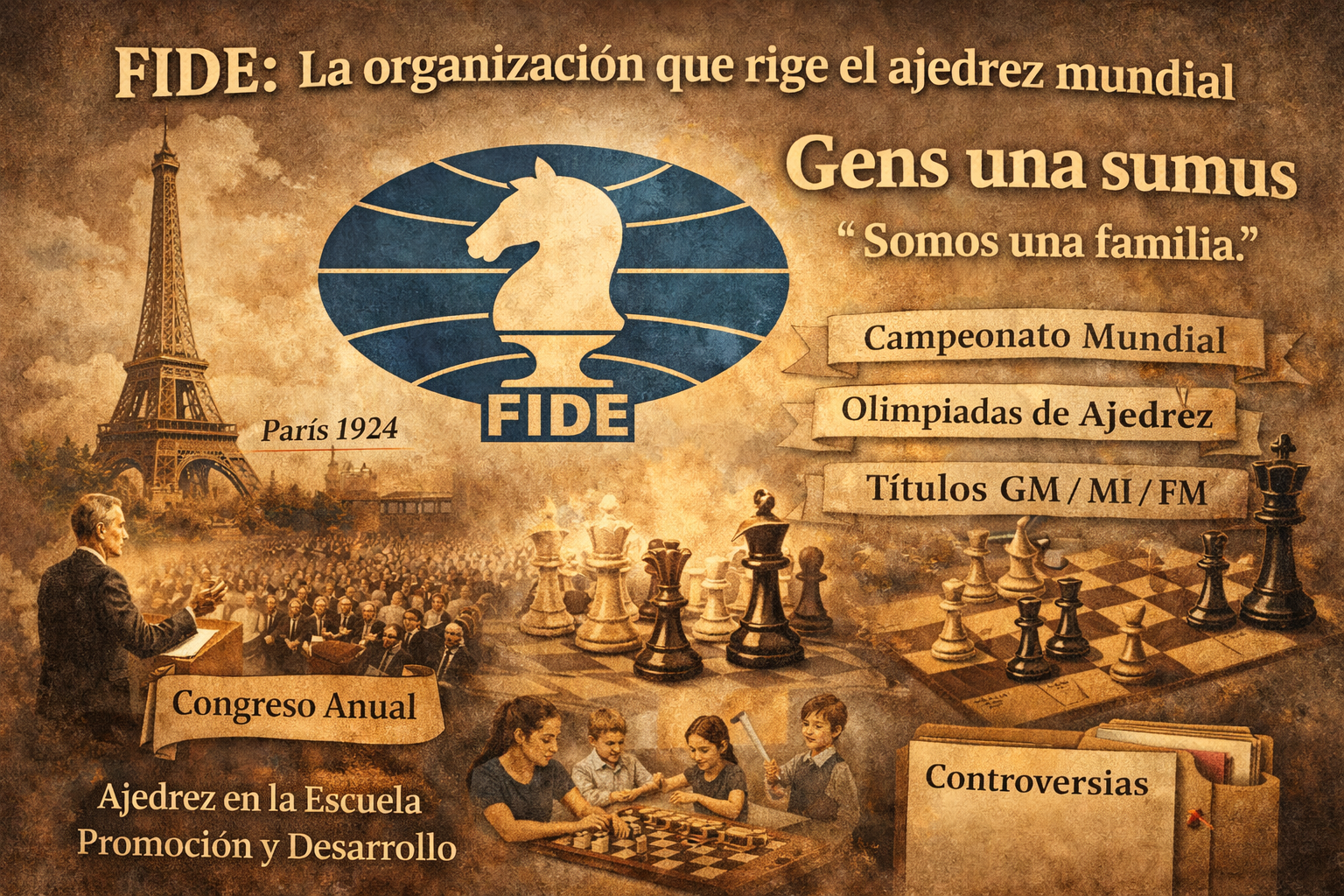
La Federación Internacional de Ajedrez (FIDE) es la organización que gobierna el ajedrez a nivel mundial. Fue fundada en 1924 en París, Francia, y su lema es “Gens una sumus”, en latín: “Somos una familia”. Su creación respondió a una necesidad clara: unificar reglas, organizar campeonatos de alcance global y promover el ajedrez como deporte y cultura.

“Gens una sumus” — Somos una familia. El lema resume la intención: un idioma común para un juego universal.

Estructura y funcionamiento

La FIDE está compuesta por federaciones nacionales de más de 180 países. Cada federación organiza el ajedrez en su territorio y colabora con FIDE en eventos y calendarios internacionales. La organización se rige por un Congreso, donde se discuten decisiones relevantes y se elige a la junta directiva, incluido el presidente.

En pocas palabras Si el ajedrez fuera una liga global, la FIDE sería el organismo que define las reglas, valida los eventos y certifica los logros oficiales.

Torneos y campeonatos

La FIDE organiza y supervisa torneos de alto perfil, incluido el Campeonato Mundial de Ajedrez. También coordina las Olimpiadas de Ajedrez, un evento bienal donde compiten equipos de todo el planeta. Además, la FIDE otorga títulos oficiales que funcionan como “rango” internacional: GM, IM, FM, entre otros.

  • Campeonato Mundial: la cúspide competitiva individual.
  • Olimpiadas: el gran escenario por equipos (selecciones nacionales).
  • Títulos: credenciales reconocidas globalmente por rating, normas o resultados oficiales.

Promoción y desarrollo del ajedrez

Una misión clave de la FIDE es impulsar el ajedrez como herramienta educativa y cultural. Mediante programas como “Ajedrez en la Escuela”, busca integrar el juego en entornos formativos para desarrollar habilidades como pensamiento crítico, atención y resolución de problemas. También promueve la accesibilidad y la participación de grupos subrepresentados, incluyendo mujeres y jóvenes.

Desafíos y controversias

Como toda institución global, la FIDE ha enfrentado controversias a lo largo de los años: disputas políticas, conflictos de interés y acusaciones de corrupción han alimentado debates sobre gobernanza y transparencia. Aun así, la FIDE continúa adaptando su estructura y prácticas con el objetivo de fortalecer el futuro del ajedrez.

Conclusión

La FIDE juega un papel crucial en el ajedrez mundial: define marcos oficiales, organiza competencias, otorga títulos y promueve el crecimiento del juego. Con retos y todo, su existencia permite que el ajedrez se mantenga como un deporte intelectual con reglas comunes y proyección global.

Origins and evolution

The International Chess Federation (FIDE) is the global organization that governs chess. It was founded in 1924 in Paris, France, and its motto is “Gens una sumus”— Latin for “We are one family.” FIDE was created to unify chess rules, organize world-level championships, and promote chess worldwide as both sport and culture.

“Gens una sumus” — We are one family. The motto captures the mission: one shared language for a universal game.

Structure and governance

FIDE is made up of national chess federations from more than 180 countries. Each federation runs chess activities locally and collaborates with FIDE on international events. The organization is governed through a Congress, where major decisions are made and the leadership is elected, including the FIDE President.

In plain terms If chess were a global league, FIDE would be the body that defines rules, validates official events, and certifies titles.

Tournaments and championships

FIDE organizes and supervises major competitions, including the World Chess Championship. It also oversees the Chess Olympiad, a biennial team event featuring national squads from around the world. In addition, FIDE awards official titles that serve as international credentials: GM, IM, FM, and more.

  • World Championship: the highest individual competitive stage.
  • Olympiad: the flagship team event (national selections).
  • Titles: globally recognized credentials via rating, norms, or direct-title routes.

Promotion and development

One of FIDE’s key missions is promoting chess as an educational and cultural tool. Through programs like “Chess in Schools”, it encourages chess in educational settings to support skills such as critical thinking, focus, and problem-solving. FIDE also works to make chess more accessible and to expand participation among underrepresented groups, including women and youth.

Challenges and controversies

Like many global institutions, FIDE has faced controversies over the years—political disputes, conflicts of interest, and corruption allegations have driven debates about governance and transparency. Even so, FIDE continues to evolve its structures and practices in order to support chess’s long-term future.

Conclusion

FIDE plays a crucial role in world chess: it sets official frameworks, runs competitions, awards titles, and promotes growth. With all its challenges, its existence helps chess thrive as an intellectual sport with shared rules and global reach.