
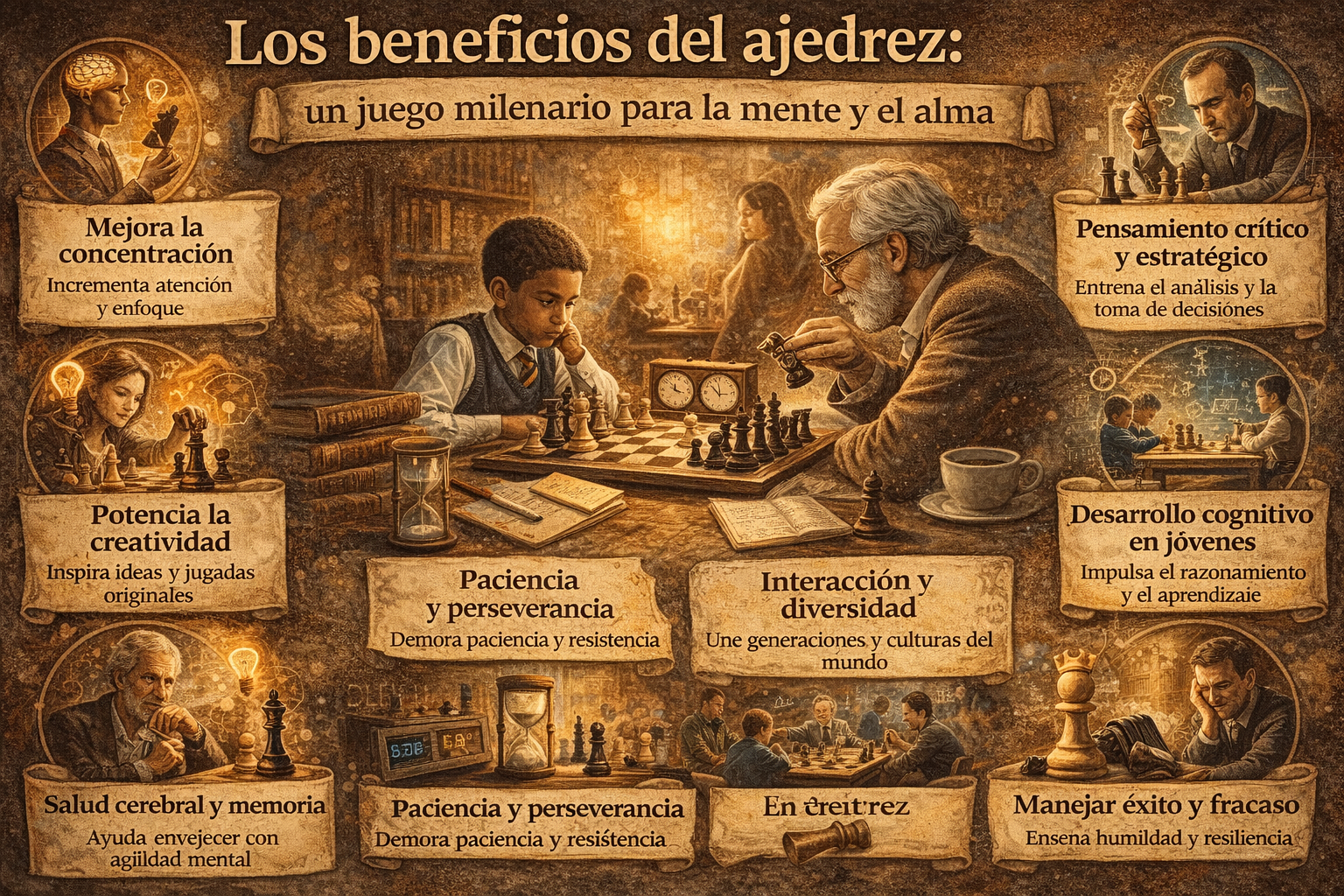
Los beneficios del ajedrez: un juego milenario para la mente y el alma
Concentración, pensamiento crítico, creatividad y comunidad: por qué el tablero sigue ganando en 2026.
El ajedrez no es solo un juego: es una disciplina intelectual con más de mil años de historia. Practicado en todas las culturas, ofrece beneficios que van más allá del tablero e impactan el desarrollo cognitivo, emocional y social.
🧠Mejora la concentración
Entrena atención sostenida, lectura del tablero y control del impulso. Un descuido cambia todo.
♟️Pensamiento crítico y estratégico
Analizas opciones, anticipas consecuencias y tomas decisiones informadas bajo presión.
🎨Creatividad e imaginación
Reglas estrictas, ideas infinitas: combinaciones, planes raros, sacrificios y soluciones originales.
🧩Memoria y patrones
Mejoras memoria visual al reconocer estructuras, tácticas y finales recurrentes.
⏳Paciencia y perseverancia
El ajedrez enseña que muchas ventajas se construyen lentamente: maniobras, profilaxis, y saber esperar el momento exacto. Aprendes a sostener un plan y a resistir posiciones difíciles.
👶Desarrollo cognitivo en niños y jóvenes
En etapas escolares, el ajedrez fortalece razonamiento lógico, comprensión lectora y hábitos de estudio. También impulsa disciplina, autoestima y manejo emocional al competir.
🧠Salud cerebral y envejecimiento activo
Mantener el cerebro activo con retos complejos ayuda a conservar agilidad mental. El ajedrez estimula atención, memoria y cálculo, y suele recomendarse como actividad intelectual a lo largo de la vida.
🌍Interacción social y comunidad
El tablero es un idioma universal: conecta generaciones y culturas. Clubes, torneos y partidas casuales crean comunidad basada en respeto y aprendizaje.
🧘Gestionar el éxito y el fracaso
Ganar y perder es parte del contrato. Aprendes a ganar sin soberbia y a perder sin drama: analizando, corrigiendo y regresando mejor.
🎮Entretenimiento y relajación
El ajedrez puede ser guerra o meditación: una forma divertida de retarte, desconectarte del ruido y entrar en flow.
Conclusión
El ajedrez fortalece mente y carácter: te hace pensar, decidir y aprender. Por eso sigue creciendo: porque en un mundo acelerado, el tablero te obliga a ir profundo.
Chess isn’t just a game—it’s an intellectual discipline with over a thousand years of history. Across cultures and generations, it delivers benefits beyond the board, shaping cognitive, emotional, and social skills.
🧠Improves focus
Trains sustained attention, board awareness, and impulse control. One slip changes everything.
♟️Builds critical & strategic thinking
You evaluate options, predict outcomes, and make informed decisions under pressure.
🎨Boosts creativity
Strict rules, infinite ideas: combinations, unexpected plans, sacrifices, and original solutions.
🧩Strengthens memory & pattern recognition
Improves visual memory by recognizing recurring structures, tactics, and endgames.
⏳Patience and perseverance
Chess teaches long-term advantage building: maneuvering, prophylaxis, and waiting for the exact moment. You learn to hold a plan and resist difficult positions.
👶Cognitive growth for kids and teens
In school years, chess supports logic, reading comprehension, and study habits. It also builds discipline, confidence, and emotional control through competition.
🧠Brain health and active aging
Keeping the brain challenged helps maintain mental agility. Chess trains attention, memory, and calculation— making it a lifelong mental workout.
🌍Social connection and community
The board is a universal language: it connects generations and cultures. Clubs and tournaments create communities built on respect and shared learning.
🧘Learning to handle wins and losses
Winning and losing is part of the deal. Chess teaches you to win without ego and lose without collapse: analyze, adjust, come back stronger.
🎮Fun, challenge, and calm
Chess can be war or meditation: a way to challenge yourself, unplug from noise, and enter flow.
Conclusion
Chess strengthens mind and character: you think, decide, and learn. That’s why it keeps growing— because in a fast world, the board forces depth.